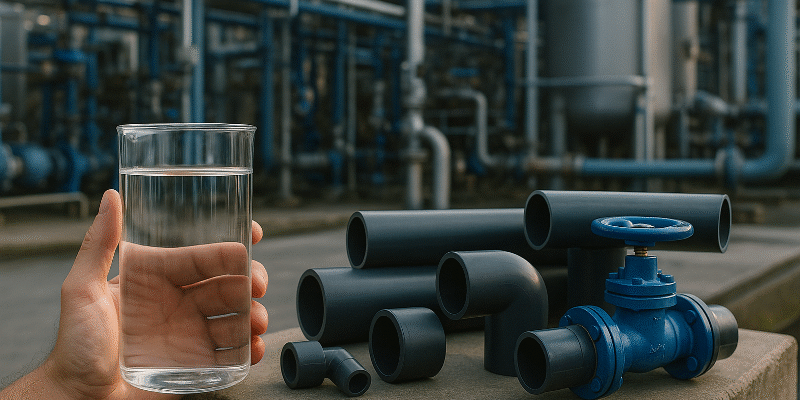
Water quality pipe selection is a critical factor in ensuring reliable, safe, and long-lasting industrial operations. Variations in water chemistry can significantly impact the durability of pipes, influencing maintenance schedules, costs, and overall safety standards. Recent findings, as evidenced by reports published from the Times of India news portal, highlight how changing water conditions in industrial regions present major challenges for engineers. These developments underscore the importance of selecting the right piping materials in industries that rely heavily on stable water systems.
Engineers and procurement specialists in manufacturing plants are increasingly aware that even small changes in water quality can trigger corrosion, scaling, or contamination issues within piping networks. Poor pipe selection can disrupt operations, create costly downtime, and increase environmental risks. For businesses operating in industrial hubs like Karawang, water quality variability demands special attention in sourcing equipment and components through trusted providers such as Karawang MRO supplier.
As documented in a peer-reviewed research journal from the MDPI platform, the interplay between water chemistry, flow conditions, and pipe material properties can significantly accelerate failures if not managed carefully. This scholarly perspective reinforces why plant engineers should approach pipe selection as a holistic process that integrates environmental variability, compliance with industrial standards, and comprehensive lifecycle cost analysis.
1. Understanding Water Quality Variability
Chemical Composition and Its Impact
Water contains varying levels of minerals, salts, and dissolved oxygen, each of which can affect how pipes degrade over time. High chloride content, for instance, accelerates stainless steel corrosion, while high calcium can lead to scaling.
Seasonal and Regional Changes
Water quality differs depending on geographic and seasonal factors. In regions like Karawang, shifts in rainfall patterns can alter pH and mineral levels, requiring adaptive pipe strategies.
Industrial Contaminants
Industries discharging wastewater can alter local water characteristics, introducing aggressive chemicals that weaken piping systems if materials are not carefully chosen.
2. Pipe Materials: Pros and Cons
Steel Pipes
Steel is strong but vulnerable to corrosion when exposed to variable water quality. Protective coatings and cathodic protection systems are often required.
PVC and CPVC
Lightweight and resistant to many chemicals, PVC and CPVC pipes are suitable for non-extreme conditions but have temperature limitations.
Ductile Iron
This material offers durability and strength, but it requires internal lining to resist corrosion in harsh water conditions.
Composite and Hybrid Materials
Innovations in composite pipes provide enhanced corrosion resistance and longer service life, making them popular in modern industrial facilities.
3. Key Considerations in Pipe Selection
Lifecycle Cost Analysis
Initial cost is only one part of the equation. Engineers must weigh maintenance, replacement, and downtime costs.
Compatibility with Chemicals
Different processes demand resistance to specific chemicals. Collaboration with industrial chemical distributor Karawang ensures alignment with process requirements.
Safety and Regulatory Standards
National and international standards guide pipe materials selection, emphasizing safety and compliance.
4. Maintenance and Monitoring Practices
Routine Inspections
Regular monitoring allows early detection of scaling, leaks, or corrosion, helping extend pipe lifespan.
Predictive Maintenance Tools
Sensors and digital monitoring systems provide real-time insights into pipe integrity and water quality.
Replacement Planning
Planned replacement schedules reduce unexpected failures and maintain operational efficiency.
Training for Technicians
Plant teams should be trained in identifying early warning signs, with support from a supplier of engineering equipment & tools Karawang.
5. Case Studies from Industrial Regions
Southeast Asia Manufacturing Plants
Many plants have faced scaling issues due to variable water hardness. Pipe selection with anti-scale linings reduced long-term costs.
Heavy Chemical Processing Units
Facilities relying on aggressive chemicals require specialized alloys or lined pipes to prevent contamination.
Food and Beverage Factories
Here, hygiene and safety are paramount, making stainless steel with advanced coatings the preferred option.
6. Frequently Asked Questions
What is the link between water quality and pipe failures?
Water chemistry can accelerate corrosion, scaling, or leaks, making material selection critical.
Which pipes are best for high-chloride water?
PVC, CPVC, or specially coated alloys offer better resilience than plain steel.
How can plants reduce downtime from pipe failures?
By using predictive maintenance and sourcing reliable components from trusted suppliers.
Is pipe selection only about durability?
No. It must also consider cost-efficiency, safety standards, and chemical compatibility.
Can suppliers assist in pipe selection?
Yes. Partnering with a knowledgeable Karawang industrial supplier can provide tailored solutions.
7. Practical How-To Guide for Pipe Selection
- Assess water chemistry reports regularly.
- Match pipe materials with water quality conditions.
- Consult with specialized distributors for chemical compatibility.
- Incorporate lifecycle costing into decision-making.
- Establish monitoring and maintenance schedules to ensure long-term reliability.
8. Comparative Table of Pipe Options
| Pipe Material | Strengths | Weaknesses | Best Applications |
|---|---|---|---|
| Steel | High strength, durable | Prone to corrosion in variable water | High-pressure applications |
| PVC/CPVC | Corrosion resistant, lightweight | Limited temperature tolerance | Chemical transport, low-pressure flows |
| Ductile Iron | Strong, long lifespan | Needs lining for harsh conditions | Municipal and industrial water systems |
| Composite/Hybrid | High resistance, long service life | Higher upfront cost | Specialized industrial environments |
9. Moving Forward with Confidence
Pipe selection influenced by water quality variability is no longer optional—it is a necessity for modern industrial plants. While PT Duta Swarna Dwipa may not yet be perfect or fully ideal in every aspect, we are consistently improving our capabilities to provide the best possible service. As a B to B procurement supplier for MRO industrial needs throughout Indonesia, officially registered with AHU, our mission is to support industries with reliable solutions. In Karawang and beyond, our team is ready to visit and discuss your unique requirements.
If you’re ready to optimize your operations with smarter pipe selection strategies, please contact us today or click the WhatsApp button at the bottom of the page. Together, we can secure the reliability and efficiency your plant deserves.