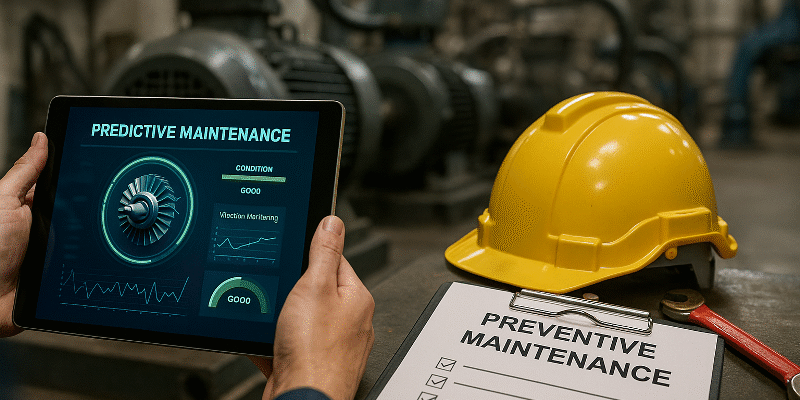
Predictive versus preventive maintenance has become a crucial debate for manufacturers, engineers, and industrial leaders seeking maximum uptime in 2025. According to insights published from an industrial technology portal, organizations worldwide are re-evaluating traditional methods and exploring data-driven strategies to ensure equipment reliability. With unplanned downtime costing millions annually, selecting the right approach is no longer optional but essential.
Companies are now focusing on balancing cost efficiency with operational performance. Preventive maintenance, which relies on scheduled inspections and servicing, has long been the backbone of industrial operations. Yet, predictive maintenance, empowered by IoT sensors, AI algorithms, and real-time monitoring, promises a leap forward. Leaders must weigh the benefits and challenges of each system to identify the winning formula for uptime.
As documented in a peer-reviewed research journal from the ScienceDirect platform, recent findings highlight how predictive tools can outperform preventive schedules in specific contexts, particularly when supported by robust data infrastructures. Nevertheless, preventive maintenance remains relevant in environments where predictive methods are not feasible. This scholarly perspective explores both approaches in detail, analyzing their advantages and limitations, and underscores why the strategic choice in 2025 may ultimately depend on industry readiness.
1. Defining the Two Approaches
Preventive Maintenance Explained
Preventive maintenance is a proactive strategy focused on scheduling inspections and part replacements at fixed intervals. Its core purpose is to reduce the probability of equipment failures by adhering to manufacturer guidelines or historical patterns.
Predictive Maintenance Defined
Predictive maintenance, on the other hand, utilizes advanced sensors, machine learning, and condition monitoring. The objective is to forecast failures before they occur, ensuring maintenance is performed precisely when needed, not earlier or later.
The Key Differences
While preventive maintenance reduces unexpected breakdowns, it can lead to unnecessary replacements and higher costs. Predictive maintenance optimizes resource allocation, but requires upfront investments in digital infrastructure and training.
2. The Role of Technology in 2025
IoT Sensors and Edge Devices
IoT sensors now enable real-time monitoring of vibration, temperature, and pressure, offering valuable insights into machine health.
Artificial Intelligence and Machine Learning
AI-driven analytics detect subtle patterns in performance data, helping predict potential failures that traditional monitoring might miss.
Cloud Platforms and Digital Twins
Cloud-based solutions integrate machine data into digital twins, allowing simulations and precise predictions of equipment behavior.
Cybersecurity Concerns
With increased connectivity, cybersecurity has become critical to safeguard operational technology systems from external threats.
3. Financial Implications of Each Strategy
Preventive Maintenance Costs
Preventive schedules often involve replacing components earlier than necessary, which can increase material expenses.
Predictive Maintenance Savings
Predictive systems minimize unnecessary replacements and reduce downtime, offering higher ROI in the long run.
Initial Investment Considerations
Deploying predictive maintenance requires significant investment in sensors, AI platforms, and skilled personnel.
Cost of Downtime
Both approaches target minimizing downtime, but predictive methods offer a sharper edge by reducing unplanned stoppages.
4. Industry Applications and Examples
Automotive Manufacturing
Automotive plants benefit from predictive systems to monitor robotic arms and assembly lines in real-time.
Food and Beverage Industry
Preventive maintenance still dominates due to strict compliance needs and the high cost of digital transformation.
Oil and Gas Operations
Predictive analytics is revolutionizing maintenance in high-risk environments, reducing accidents and costly halts.
Local Relevance in Karawang
As a Karawang MRO supplier, predictive and preventive solutions can be tailored to local automotive and chemical plants seeking maximum efficiency.
5. Benefits of Predictive vs Preventive Maintenance
Predictive Advantages
- Extends equipment lifespan
- Reduces downtime dramatically
- Lowers maintenance costs
Preventive Advantages
- Easy to implement
- Requires minimal technological investment
- Suitable for smaller industries
Predictive Limitations
- High setup costs
- Requires skilled workforce
- Data security challenges
Preventive Limitations
- Unnecessary replacements
- Potentially higher long-term costs
- Limited flexibility
6. Comparative Analysis for Uptime
Reliability Metrics
Predictive approaches score higher in reliability indices compared to preventive strategies.
Efficiency Gains
Preventive ensures consistent scheduling, while predictive enables on-demand interventions, improving efficiency.
Cost-Benefit Tradeoff
Predictive wins long-term, but preventive offers better short-term control for small and medium-sized enterprises.
Supplier Insights
As a Karawang industrial supplier, the integration of both strategies ensures adaptable solutions for varying client needs.
7. FAQs on Predictive vs Preventive Maintenance
Q1. Which strategy reduces downtime better?
Predictive maintenance is more effective in minimizing unplanned downtime.
Q2. Is preventive maintenance still relevant?
Yes, especially in industries where digital infrastructure is limited.
Q3. What is the cost difference between the two?
Preventive is cheaper upfront, while predictive provides greater long-term savings.
Q4. How does safety factor into these approaches?
Both strategies enhance safety, but predictive systems identify risks earlier.
Q5. Can both methods be combined?
Yes, a hybrid model often yields the best balance between cost and reliability.
HowTo: Transitioning from Preventive to Predictive
- Assess your current maintenance data.
- Invest in IoT sensors for critical equipment.
- Train staff on predictive tools and AI platforms.
- Start with hybrid models before going full predictive.
8. Tabular Comparison of Predictive vs Preventive
| Aspect | Preventive Maintenance | Predictive Maintenance |
|---|---|---|
| Cost | Lower upfront, higher long-term | Higher upfront, lower long-term |
| Technology Needs | Minimal | Advanced sensors, AI, cloud integration |
| Downtime Prevention | Moderate | High |
| Implementation Complexity | Easy | Complex, requires skilled workforce |
| Best Fit For | SMEs, compliance-driven industries | Large-scale, data-driven operations |
9. Toward a Smarter Maintenance Future
In the evolving landscape of industrial operations, predictive versus preventive maintenance is not about one completely replacing the other, but about leveraging both strategies wisely. For industries in Karawang, partnering with a Karawang safety tool supplier, an industrial chemical distributor Karawang, or a supplier of engineering equipment & tools Karawang can provide the right resources to adopt hybrid models.
We, PT Duta Swarna Dwipa, are a B to B procurement supplier for MRO industrial needs throughout Indonesia, officially registered at the AHU of the Ministry of Law and Human Rights of the Republic of Indonesia. In Karawang and beyond, our team is ready to visit and discuss your industrial requirements. We may not yet be perfect, but we continuously improve to serve better every day. For consultations, feel free to contact us or click the WhatsApp button at the bottom of this page.